
Few things are as frustrating as a nerve that will not calm down. Maybe it is a sharp zing down the leg when you stand up, a numb patch in your foot, or a deep ache in your lower back that flares the moment you sit too long. These signals often trace back to one thing: pressure on a spinal nerve that has become irritated. If you have been searching for answers, you may have come across Spinal Decompression Therapy West Des Moines IA as one conservative option people explore before considering anything more invasive.
This article takes a closer look at the nerve side of the story. Rather than focusing on discs alone, we will walk through how spinal nerves get squeezed, what that pressure feels like, how a decompression table is designed to ease it, and what a realistic care path looks like. We will also cover who may be a good fit, what daily habits keep irritated nerves from flaring again, and how to ask smart questions before you begin.
Whether you are a busy business owner who sits through long days, a developer hunched over a keyboard, or simply someone tired of living around a nagging symptom, understanding the mechanics can make your next step feel far less intimidating. Individual results vary, and nothing here replaces a hands-on evaluation, but a little knowledge goes a long way toward making confident decisions about your spine.
How Spinal Nerves Get Irritated in the First Place
Your spinal cord sends out pairs of nerve roots between each vertebra, and those roots exit through small openings called foramina. When everything is aligned and the discs hold their height, those openings stay roomy and the nerves glide freely. When the space narrows, even slightly, the nerve can become compressed or inflamed. Disc bulges, thinning discs, joint swelling, and bony changes can all crowd that exit route.
Irritation is not always about a dramatic injury. Often it builds slowly through repetitive stress, such as years of awkward lifting, long hours in a poor chair, or a spine that has been compensating for stiffness elsewhere. The nerve itself does not need to be badly damaged to complain loudly. Inflammation around it can be enough to create burning, tingling, or radiating pain. That is why two people with similar imaging can feel very different, and why a thorough exam matters more than a single scan.
Common Signs That a Nerve Is Under Pressure
Nerve-related discomfort tends to behave differently from a simple muscle strain. Muscle soreness usually feels dull, localized, and better with gentle movement. Nerve irritation often travels. You might notice pain that radiates into the buttock, thigh, calf, or foot, or into the shoulder, arm, and fingers if the problem sits higher in the spine. Many people describe pins and needles, electric shocks, or a heavy, weak feeling in a limb.
Here are signs worth paying attention to:
- Pain that shoots or burns along a specific path in the leg or arm
- Numbness or tingling that comes and goes with posture
- Symptoms that worsen with sitting, coughing, or bending forward
- A feeling of weakness when climbing stairs or gripping objects
Sudden loss of bladder or bowel control, or rapidly worsening weakness, is an emergency that needs immediate medical attention rather than a scheduled appointment.
What Spinal Decompression Actually Does
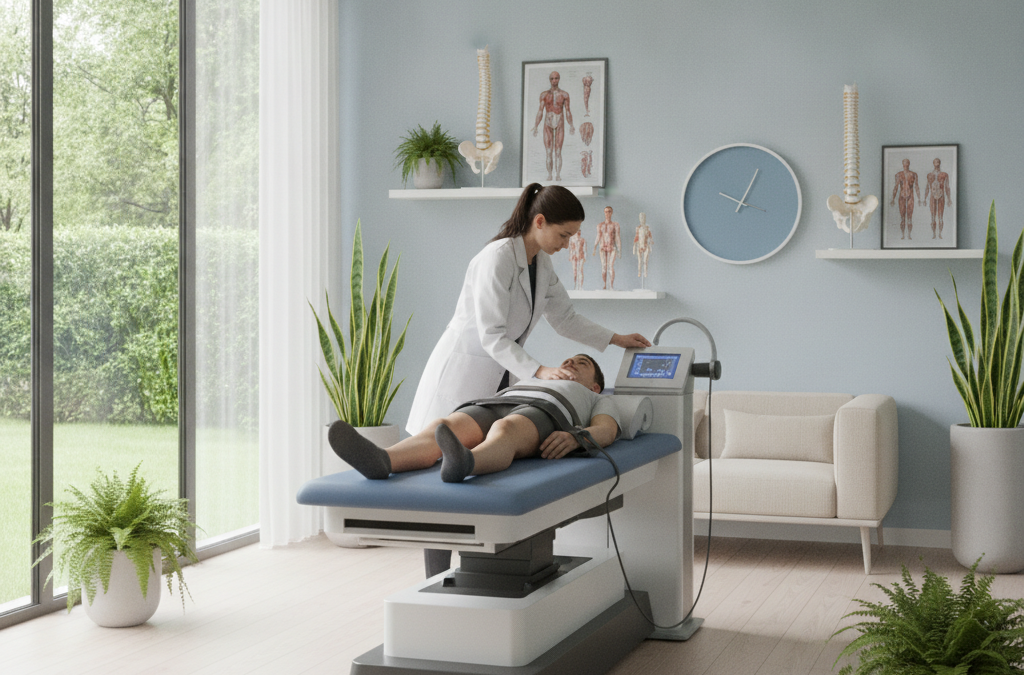
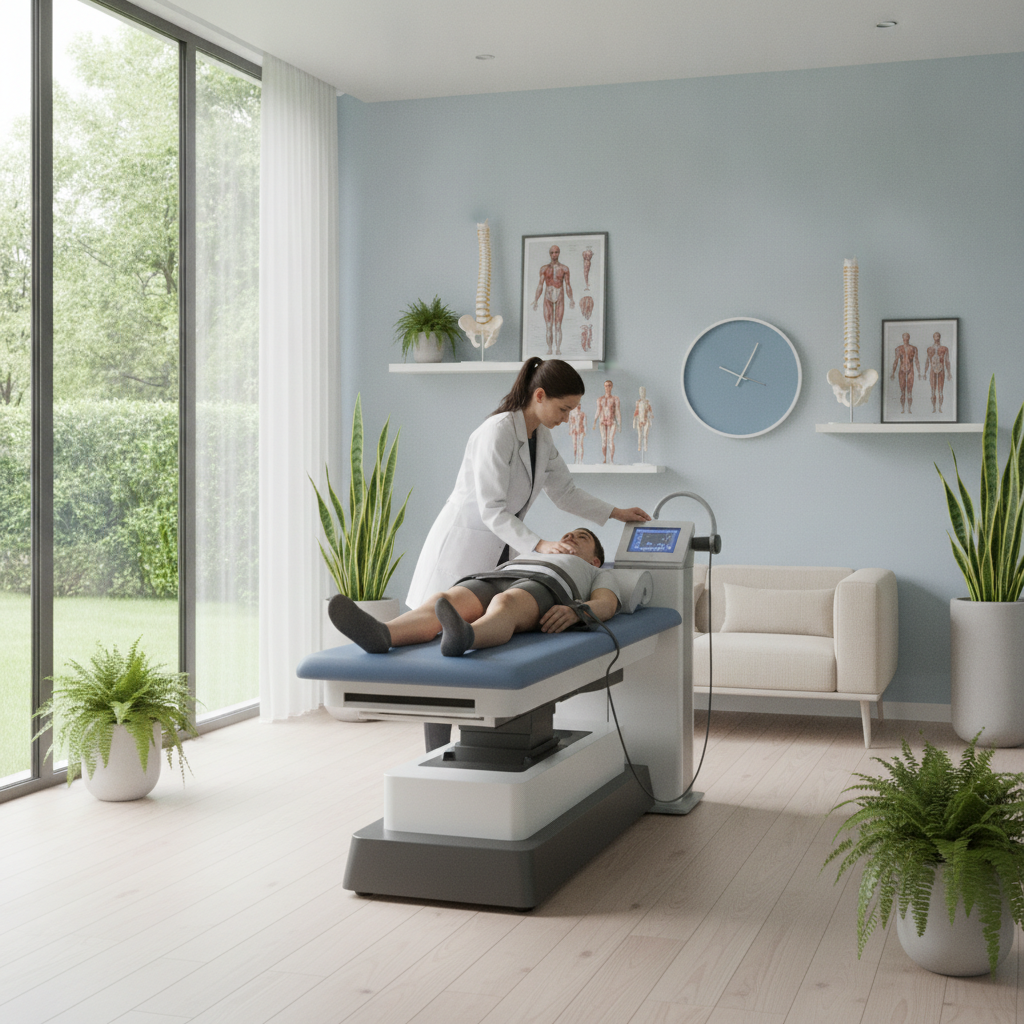
The idea behind spinal decompression is simple to picture. Using a computer-controlled table, the spine is gently and gradually stretched in a precise, cycling pattern. That cycle of tension and release is intended to slightly increase the space between vertebrae and create a mild negative pressure inside the discs.
In theory, that change may allow a bulging disc to settle back toward its center, take pressure off the nerve root beside it, and encourage fluid and nutrients to move into the disc. It is not a hard yank and it should not feel violent. Most people lie comfortably, strapped in with a supportive harness, while the table does its work. The goal is relief from compression, not forcing a joint to move. Researchers continue to study how well it works across different conditions, so a good provider will describe it as one tool rather than a guaranteed fix.
Why Decompression Appeals to People Avoiding Surgery
When a nerve hurts, the fear of surgery often looms large. Many people want to know whether anything reasonable exists in between doing nothing and going under the knife. That middle ground is where non-surgical nerve pressure relief options tend to come in. They allow you to try a conservative approach first, watch how your body responds, and keep other doors open.
The appeal is practical as well as emotional. There are no incisions, no anesthesia, and typically no long recovery period away from work or family. You can often keep up with your normal routine while you progress through care. Of course, conservative care is not right for every situation. If an exam reveals red-flag findings or progressive neurological loss, a referral to a medical specialist is the responsible move. Good chiropractors know where their scope ends and will say so plainly.
Finding the Right Care Locally
Choosing a provider is just as important as choosing a therapy. A thoughtful evaluation should come before any table session. That means a conversation about your history, a physical and neurological screening, and a review of any imaging you already have. Anyone who recommends a treatment plan without examining you deserves a few follow-up questions.
If you are looking for a Chiropractor in West Des Moines, IA, consider asking how decompression fits into a broader plan, how progress will be measured, and what happens if you do not improve. Clear answers on those points are a good sign. A trustworthy office will also be open about how many visits they expect, what each visit costs, and which other therapies, such as targeted exercises or soft tissue work, may be paired with the table to support your recovery.
Who May Be a Good Candidate
Decompression is most often considered for people with symptoms tied to disc-related or mechanical nerve pressure, particularly when pain travels beyond the back itself. It may also be explored for chronic stiffness paired with referred discomfort. The table below gives a general picture of how situations commonly line up, though only an exam can sort out your specific case.
| Situation | General Consideration |
|---|---|
| Radiating leg or arm pain with disc involvement | Often evaluated as a possible candidate |
| Chronic stiffness with intermittent tingling | May be considered after a full exam |
| Pregnancy or certain implants and fusions | Usually not appropriate |
| Progressive weakness or loss of control | Needs urgent medical referral |
Desk Life, Driving, and Nerve Pressure
Modern work is surprisingly hard on spinal nerves. Sitting loads the lower spine more than standing does, and slouching shifts that pressure toward the back of the discs, right where nerve roots live. Add a long commute and a few hours of screen time at night, and a sensitive nerve may rarely get a break.
For people who spend their days at a desk, reading about Spinal Decompression for Workday-Related Back Strain in West Des Moines can help connect the dots between job habits and symptoms. Small adjustments often matter: raising your monitor, using lumbar support, changing position every half hour, and walking during calls. These steps will not replace professional care when a nerve is truly inflamed, but they reduce the daily load that keeps symptoms stirring.
What a Typical Care Path Looks Like
Most programs follow a rhythm. An initial exam sets the baseline, followed by a series of sessions spread over several weeks. A single session on the table commonly lasts around 20 to 30 minutes, and visits are often scheduled a few times per week at first, then tapered as symptoms settle. Exact timing depends on your condition and how you respond.
Alongside the table, many offices add supportive work such as gentle mobility drills, core stabilization, heat or cold, and posture coaching. These extras matter because decompression alone does not retrain the muscles that hold your spine steady. You can expect periodic reassessments, where your provider rechecks movement, nerve tests, and your own pain ratings. If numbers are not moving in the right direction after a fair trial, a good clinician will adjust the plan or refer you onward.
Keeping Irritated Nerves Calm Between Visits
What you do between appointments can quietly make or break your progress. Nerves recover best in an environment with less repeated provocation, so think about reducing the biggest triggers first. Avoid prolonged static positions, and break up sitting with brief walks. Sleep on your side with a pillow between your knees, or on your back with support under them, to keep the spine neutral.
Staying hydrated may also help, since discs rely on fluid. Gentle movement, like walking or easy swimming, usually feels better than complete rest, which can stiffen tissues and slow healing. Once symptoms quiet down, many people benefit from planning ahead. Reading The Role of Chiropractic Maintenance Care in Staying Active Year-Round offers a useful look at how periodic check-ins can help you stay ahead of flare-ups instead of reacting to them after the fact.
Questions Worth Asking Before You Start
Walking into a first appointment with a short list of questions keeps the conversation focused and protects you from vague promises. Ask what findings from your exam suggest decompression is appropriate, and what findings might change that recommendation. Ask how many sessions are typical, what total cost looks like, and what you should notice by the halfway point.
It also helps to ask what the plan is if you plateau, and whether other care, such as imaging or a medical consult, would come into play. A confident provider welcomes these questions rather than dodging them. Be cautious about anyone who guarantees a cure, pressures you into a large prepaid package before examining you, or dismisses your concerns. Your nerves, and your wallet, deserve straightforward, honest answers.
Setting Realistic Expectations for Recovery
Healing irritated nerves is rarely instant. Some people notice a shift in the first couple of weeks, while others need more time, and a few do not respond at all. Progress often looks like fewer flare-ups, shorter episodes, or the ability to sit, drive, and sleep with less interruption, rather than a sudden disappearance of every symptom.
Tracking your own data helps. Jot down daily pain levels, how long you can sit comfortably, and which activities provoke symptoms. Share those notes at reassessments so your provider can see trends you might miss. Remember that setbacks are normal and do not erase earlier gains. Patience, consistency with home habits, and honest communication usually shape outcomes more than any single session, and they keep expectations grounded in what conservative care can reasonably deliver.
Your Next Steps
An irritated spinal nerve can make ordinary days feel like a negotiation. The good news is that you do not have to guess your way through it. Understanding how pressure builds around a nerve root, why symptoms travel, and how a decompression table aims to create breathing room gives you a solid foundation for making decisions. It also helps you recognize which signs call for a careful hands-on exam and which call for urgent medical attention.
If you are weighing Spinal Decompression Therapy West Des Moines IA as part of your plan, start with a thorough evaluation rather than a sales pitch. Look for a provider who explains the reasoning behind each recommendation, tracks your progress with real measures, and is willing to coordinate with other healthcare professionals when needed. Pair professional care with the everyday habits that protect your spine, like moving often, setting up your workspace well, and sleeping in supportive positions.
Most importantly, give yourself permission to act early. Nerve irritation tends to respond better when it is addressed before it becomes a long-standing pattern. Write down your symptoms, gather any imaging, prepare your questions, and book a visit. Relief is not guaranteed for everyone, but a clear plan and informed expectations put you in the strongest position to move, work, and live with less pressure on the nerves that carry your daily life.